Councils — 1834
The High Council of 1834
Organized in Kirtland in February 1834, the church’s first standing council of twelve high priests came with a written procedure designed so that the accused would never stand alone.
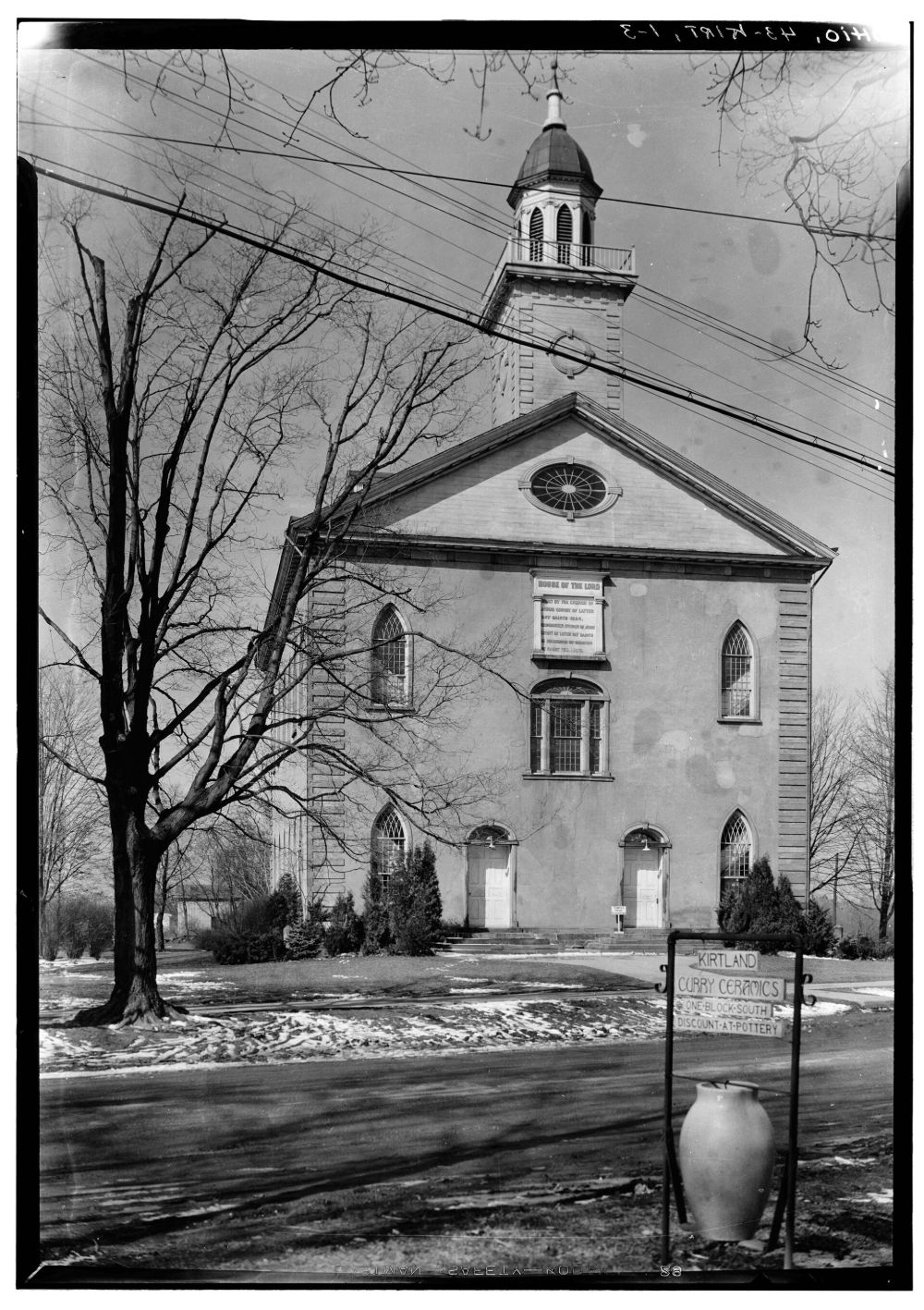
On February 17, 1834, a council of twenty-four high priests met at Joseph Smith’s house in Kirtland, Ohio, and organized a body the church had not had before: a standing council of twelve high priests with one or three presidents, to settle important difficulties that neither a branch nor the bishop’s council had resolved to the parties’ satisfaction. Two days later the minutes of that meeting, revised by Joseph Smith, were accepted as the council’s constitution. They survive as section 102 of the Doctrine and Covenants.
The meeting of February 17
Joseph Smith, Sidney Rigdon and Frederick G. Williams were acknowledged as the council’s presidents, an appointment separate from their places in the presidency of the high priesthood. Twelve high priests were chosen as counselors. Forty-three people voted for them in the name of the church, nine other high priests, seventeen elders, four priests and thirteen members, and each counselor was asked whether he accepted the appointment and would act according to the law of heaven. The counselors then drew lots to fix the order in which they would speak:
- Oliver Cowdery
- Joseph Coe
- Samuel H. Smith
- Luke Johnson
- John S. Carter
- Sylvester Smith
- John Johnson
- Orson Hyde
- Jared Carter
- Joseph Smith Sr.
- John Smith
- Martin Harris
The procedure
The minutes set out the council’s working rules in detail. Seven counselors made a quorum and could appoint high priests to stand in for absent members; vacancies were filled by nomination of the presidents and approval of a general council of high priests. A simple case was argued by two counselors, a difficult one by four, the most difficult by six, never more.
The accused was entitled to half the council. Counselors who had drawn even numbers were to stand up on behalf of the accused and prevent insult or injustice.
After the evidence and the counselors’ presentations, the accuser and the accused could speak for themselves. The president then gave a decision and asked the twelve to sanction it. Any counselor who had not spoken could point out an error; the case would then be reheard and changed if new light emerged, with the majority deciding. Where a question of doctrine was not settled by what had been written, the president could seek the mind of the Lord by revelation.
The minutes also looked beyond Kirtland. High priests traveling or living elsewhere could convene temporary councils on the same pattern for the most difficult cases and were to send their proceedings to the standing council. Either party could appeal to “the high Council at the seat of the general government of the Church,” whose presidents would decide whether an appeal deserved a rehearing. The phrase, rather than a reference to Kirtland by name, anticipates a time when the church’s seat would be somewhere else.
The minutes revised
The clerk, Orson Hyde, noted on February 17 that many questions had been raised and errors had likely been made, and the meeting voted that Joseph Smith should correct the minutes by inspiration. He worked on them the next day. On February 19 the revised minutes, with material both added and removed, were read three times to a council of sixty-two, corrected at least once, and accepted unanimously as “a form, and constitution of the high Council of the Church of Christ hereafter,” with leave for the president to supply anything later found lacking. Joseph Smith told the council it had been organized according to the ancient order. It then heard its first case.
More than a court
The minutes describe a court, chiefly of appeal, but the council acted as more from the start. It heard cases in the first instance as well as on appeal, and within a week it was dealing with the church’s general affairs: on February 24, 1834, it heard Parley P. Pratt and Lyman Wight report on the Missouri refugees and named Joseph Smith to lead an expedition to them (see 1834). In the months that followed it helped set church policy and assigned missionaries, and after the United Firm was divided, some of the church’s temporal business appears to have passed to it.
Reading the record
The high council is the first body on this site whose working procedure was written down, voted on and revised before it heard a case. Its rules, with lots, a fixed number of speakers, half the council assigned to the accused, and a decision open to the counselors’ review, are those of a tribunal built to be seen as fair. A second standing council was organized on the same pattern in Clay County, Missouri, in July 1834, just after the period this site covers. The Kirtland minutes, revised, became section 5 of the 1835 Doctrine and Covenants.
Primary sources: Joseph Smith Papers, “Minutes, 17 February 1834”; “Minutes, 19 February 1834”; “Revised Minutes, 18–19 February 1834 [D&C 102]”; historical introduction to D&C 102 in Joseph Smith’s Revelations: A Doctrine and Covenants Study Companion (2020). This page links out to primary sources rather than reproducing them at length.