Founding document — 1830
The Articles and Covenants of 1830
The first governing text of the Church of Christ: the only early revelation put to a vote of the membership, and the document every branch was organized by.
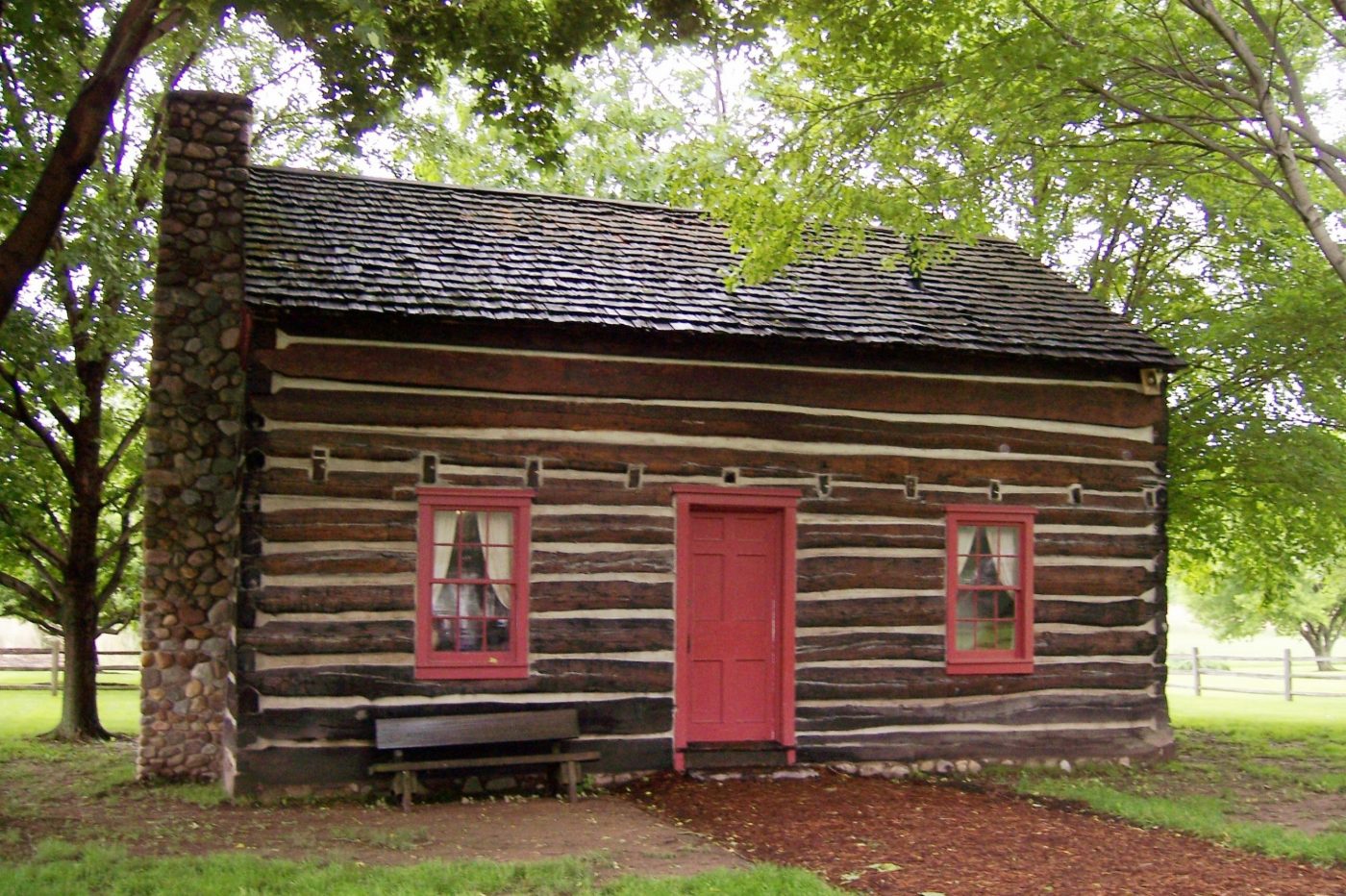
When the elders of the Church of Christ met for their first conference at Fayette, New York, on June 9, 1830, their first business was a reading. Joseph Smith read the “Articles and Covenants,” and the minutes record that they were received by the unanimous voice of the congregation. No other early revelation was put to the members for approval in this way. For the next five years the text served as the church’s working constitution: the list of its offices, the form of its ordinances, and the procedure by which its scattered branches stayed in touch.
What the document is
The Articles and Covenants does not read like most early revelations. Instead of the voice of God addressing a named recipient, it opens with a third-person history: the church “regularly organized and established agreeable to the laws of our country” in the fourth month of 1830, on its sixth day, with Joseph Smith and Oliver Cowdery as its first and second elders. A brief account of Joseph Smith’s calling follows, then a series of declarations in the first person plural, “we know,” covering God, the creation, the fall, Christ, baptism, justification and sanctification, and the possibility of falling from grace. The second half turns practical: who may be baptized, what each office does, how meetings and conferences are run, and how members are recorded.
Contemporaries recognized the form. When Eber D. Howe printed a copy in the Painesville Telegraph on April 19, 1831, with mocking commentary, he called it a confessional. The comparison was apt: the published disciplines of the Congregationalist and Methodist churches likewise began with a history and a statement of belief before turning to offices, baptism and the Lord’s Supper.
Offices and their duties
The Articles name four offices, elder, priest, teacher and deacon, adding that an apostle is an elder. Elders baptize, ordain the other offices, administer the sacrament, confirm members by the laying on of hands, and take the lead of meetings. Priests preach, baptize and administer the sacrament, visit members’ homes, and may ordain other priests, teachers and deacons, but yield to an elder when one is present. Teachers watch over the church: they are to see that there is no iniquity, hardness, lying, backbiting or evil speaking, and that members meet together often. Deacons assist the teachers. Neither teachers nor deacons may baptize or administer the sacrament, though both may warn, expound, exhort and teach.
The record suggests these offices were in use before the text describing them was accepted. Elders, priests and teachers had already been ordained by the June 1830 conference, and the earliest surviving licenses, for John Whitmer, Joseph Smith Sr. and Christian Whitmer, are dated that same day. Deacons are another matter: no church record mentions one until the conference minutes of October 25, 1831, and no 1830 license for a deacon survives, although every manuscript copy of the Articles describes the office. The later development of these offices is traced on Organizational Structure.
Conferences, licenses and the record of names
The procedural clauses are what made the document a constitution rather than a creed. The elders were to meet in conference to do church business, once every three months in the copy entered in Revelation Book 1. A priest or teacher ordained by a priest was to take a certificate to an elder, who would issue a license. Each branch was to send one of its teachers (a priest or teacher, in some copies) to the conferences with the names of those who had joined since the last, so that a single elder could keep a general record of the church’s members; the names of the expelled were to be “blotted out.” A member moving to a branch where he was not known could carry a letter certifying his standing.
These few sentences account for much of the church’s administrative paper in its first years. Licenses, conference minutes and membership lists all answer to them.
A disputed passage
The clause on baptism required candidates to “truly manifest by their works” that they had received the Spirit unto the remission of their sins, a requirement the Book of Mormon’s own account of baptism does not contain. In the summer of 1830 Oliver Cowdery wrote to Joseph Smith objecting to the passage. Smith’s later history records his reply: he asked by what authority Cowdery presumed to alter a revelation. The disagreement was settled at the church’s second conference, on September 26, 1830, where Cowdery himself read the Articles and Covenants aloud and Smith commented on them. No new vote was taken.
The exchange matters for dating as well as doctrine. It shows that by July 1830 Joseph Smith regarded the Articles and Covenants as a revelation, not merely a set of bylaws.
When was it written?
The date is less settled than the June 1830 vote suggests. Joseph Smith’s history places the document in 1829, among instructions received at the Whitmer home that, it says, also fixed the day on which the church would be organized. Oliver Cowdery’s own “Articles of the Church of Christ,” which shares some of its content, dates from June 1829. Yet every surviving early copy speaks of the April 6, 1830 organization as already accomplished, and the copy John Whitmer entered in Revelation Book 1 is dated April 10, 1830. Whatever existed in 1829 was revised after the church was organized, and with no 1829 text extant, how much was revised cannot be known.
The printed versions dated it differently again. The Evening and the Morning Star left it undated in 1832; the Book of Commandments dated it June 1830, apparently from the conference; and the 1835 Doctrine and Covenants dropped the date altogether, the only Book of Commandments text whose date was removed without a replacement. Applying this site’s dating rule, the document’s own reference to the completed organization is the controlling evidence: the text accepted in June 1830 postdates April 6, 1830.
Copies and printings
Few early texts circulated more widely in manuscript. Copies survive in Revelation Book 1, in notebooks kept by Sidney Gilbert and Orson Hyde, in Zebedee Coltrin’s diary (in John Whitmer’s hand, January 1832), in the hand of Symonds Rider, and in a copy made by Harry Brown about 1834. Several early versions append the revelation of April 16, 1830, on rebaptism, which may mean the text read at the June conference included it.
In print, the Articles were the first revelation published in the church’s own newspaper, opening the first issue of The Evening and the Morning Star in June 1832, and the only one it printed twice, again in June 1833. They became chapter 24 of the Book of Commandments and section 2 of the 1835 Doctrine and Covenants, placed directly after the preface. The most substantial revisions were made for the 1835 edition, which added instructions for offices, including high priest, bishop and high counselor, that did not exist when the conference voted in 1830.
Reading the record
Read alongside the conference minutes and licenses, the Articles and Covenants show a church organizing itself on paper almost as fast as it acted. Offices were filled before the text describing them was approved, a general record of names was required before anyone was appointed to keep it, and the document itself kept changing as the church outgrew it. The June 1830 text is best read as a snapshot of a small New York church with four offices and a quarterly conference: the base on which every later office described on this site was built.
Primary sources: Joseph Smith Papers, “Articles and Covenants, circa April 1830 [D&C 20]”; “Minutes, 9 June 1830”; “Minutes, 26 September 1830”; historical introduction to D&C 20 in Joseph Smith’s Revelations: A Doctrine and Covenants Study Companion (2020). This page links out to primary sources rather than reproducing them at length.